

Best Dradis Alternatives & Competitors in 2026
Dradis has been part of pentest tooling since 2007 and earned its reputation by combining scanner output into one workspace. But the workflow that was modern then — a self-hosted app, Word mail-merge templates, and reports delivered as email attachments — is showing its age next to collaborative platforms with client portals and AI-assisted writing. Full disclosure: we build PentestPad, a Dradis competitor — so we'll put ourselves first and be specific enough that you can fact-check every claim, including where the other tools beat us.
Why Teams Are Outgrowing Dradis in 2026
A dated editing experience
The interface predates the modern collaborative editor. Testers work in separate notes and issues rather than co-writing one live report, and the day-to-day feel is closer to a wiki than to the tools your team uses everywhere else.
The Word template ceiling
Report automation runs on Word mail-merge style templates. They work for simple layouts, but complex report designs get brittle fast — and every tweak means round-tripping through Word and re-testing the export until it stops breaking.
No client experience layer
Delivery ends with a document over email. There's no whitelabel portal where clients track findings, request retests, and watch remediation progress — which is increasingly what differentiates consultancies competing for the same engagements.
PentestPad vs Dradis at a Glance
| PentestPad | Dradis | |
|---|---|---|
| Public pricing | From $49/user/month | CE is free; Pro pricing is published |
| Deployment | Cloud or fully self-hosted, every plan | Self-hosted only |
| Real-time collaboration | Multiple testers in one live report | Shared workspace, not live co-editing |
| AI Assistant & MCP server | AI drafts findings; MCP server for your AI tools | |
| Report templates rebuilt for you | Bring your DOCX — we rebuild it, free | Word mail-merge templates, built and maintained by you |
| Whitelabel client portal | Custom domain and branding | Delivery ends with a document |
| Tool & scanner imports | 20+ scanners and tools | Huge integration library — Dradis's defining strength |
| Retesting workflows | Built into the client portal | Remediation tracking in Pro only |
| Managed EU cloud, GDPR, ISO 27001 | EU company, certified | Self-hosted — compliance is on you |
Comparison reflects publicly available information as of September 2026. Spot something outdated? Tell us and we'll fix it.
The 6 Best Dradis Alternatives
1. PentestPad — best overall Dradis alternative
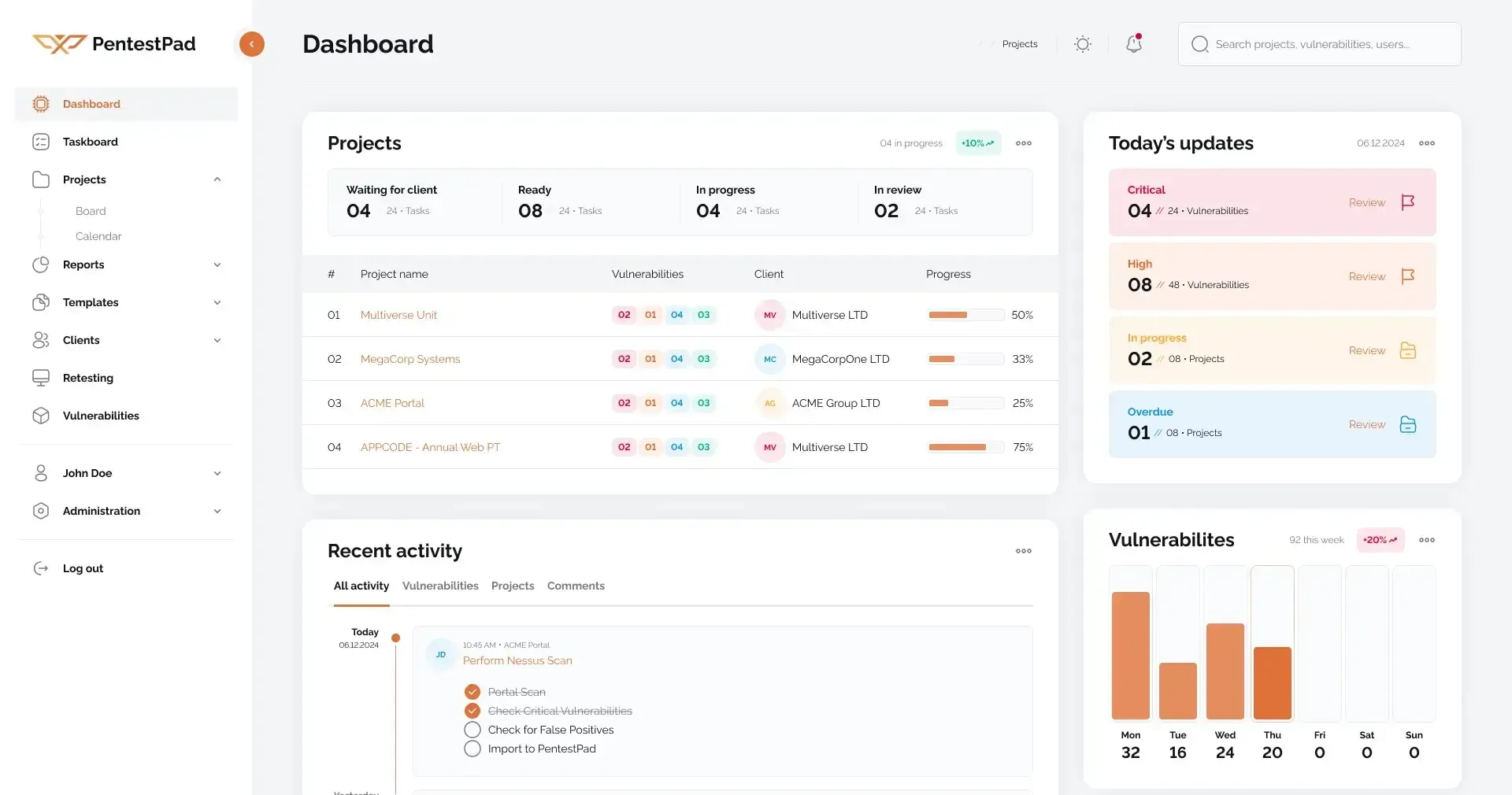
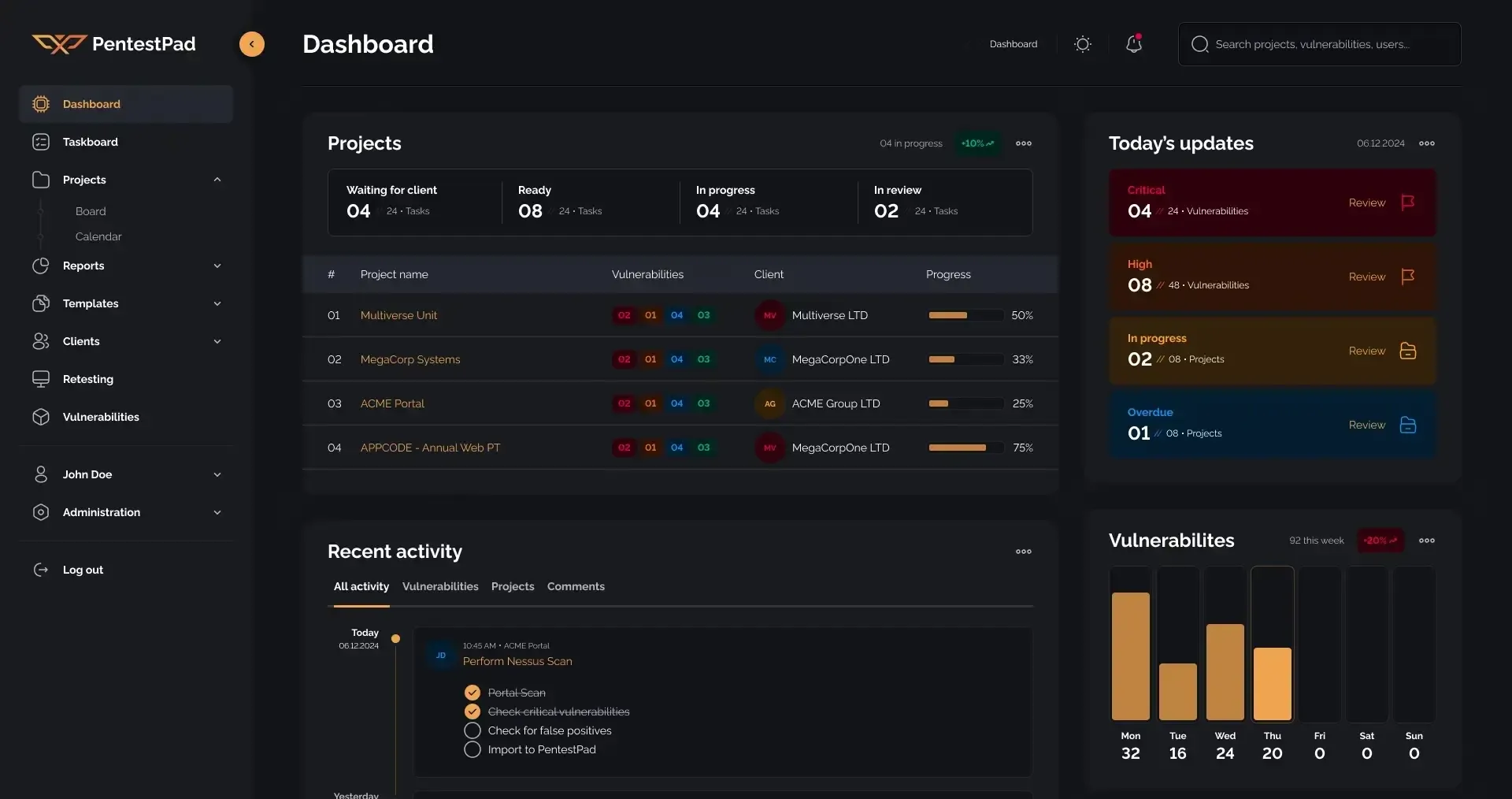
PentestPad is a pentest reporting and engagement platform built for consultancies and red teams. It covers Dradis's core job — importing from Nessus, Burp, Nmap, Qualys, and 20+ other tools into one workspace — and then modernizes everything around it: a real-time collaborative editor instead of separate notes, automated DOCX/PDF/XLSX reporting instead of mail-merge, and a whitelabeled client portal instead of a document over email. The AI Assistant drafts finding descriptions, impact, and remediation in the tone of a professional pentest report, and the MCP server connects your own AI tooling — Claude or any MCP client — to the platform, so findings flow straight into a draft report.


If you run Dradis because of self-hosting requirements, that carries over: deploy PentestPad as managed EU cloud or fully self-hosted for air-gapped environments, and the AI works either way — including against a self-hosted LLM inside your network. PentestPad is EU-based, GDPR-compliant, and ISO 27001 certified. Pricing is public: from $49/user/month, cloud and self-hosted included, and we rebuild your existing Word report template for free.
Where it struggles: if free and open source is a hard requirement, PentestPad is commercial software — Dradis CE or SysReptor keep the license cost at zero, as long as you're happy paying in maintenance time instead.
Best for: consultancies and internal teams that live and die by report quality, turnaround time, and client experience. Explore the features or the reporting tool in detail.
2. SysReptor
The most modern open-source option — and the natural pick if what you like about Dradis is self-hosting and what you don't is the workflow. Findings are written in Markdown, report layouts are designed in HTML/CSS, and PDF exports look genuinely good. The community edition is free and self-hosted, with paid professional and cloud tiers, and it's popular with OSCP and CPTS candidates.
Where it struggles: it's a reporting tool, not an engagement platform — no client portal, thin project management, and PDF-only export means clients who require editable DOCX deliverables are out of luck. Template design assumes HTML/CSS skills.
Best for: solo pentesters and small self-hosting teams that want beautiful PDF reports and full control over their stack. We compare it in depth in our SysReptor alternatives guide.
3. PlexTrac
The enterprise heavyweight of the category: pentest reporting plus findings management, analytics, and remediation workflows. In August 2026 PlexTrac was acquired by Brinqa and is repositioning toward continuous threat exposure management for large security programs.
Where it struggles: pricing is opaque, sales-call-only, and firmly enterprise-tier — a big jump if you're coming from free or per-user Dradis — and the platform is heavy for teams whose deliverable is a report.
Best for: large enterprises consolidating offensive security data into an exposure management program. See our full PlexTrac alternatives comparison.
4. AttackForge
A pentest management and reporting platform with strong workflow orchestration — engagement scheduling, methodologies, asset libraries, and remediation workflows. Like Dradis Pro it takes methodology seriously, but wraps it in a more modern platform.
Where it struggles: the workflow depth comes with process overhead that small consultancies may not want, and report template flexibility isn't its core strength.
Best for: enterprises and MSSPs that need structured pentest program management across many concurrent engagements.
5. Ghostwriter (SpecterOps)
A free, open-source project management and reporting engine built by SpecterOps for red team operations: infrastructure tracking, domain management, activity logging with Mythic and Cobalt Strike integrations, plus collaborative report writing with Jinja2-templated DOCX output.
Where it struggles: it's red-team infrastructure more than consultancy reporting software — for web, network, and cloud pentest deliverables it's more machinery than you need, and you maintain it yourself.
Best for: dedicated red teams running long-term operations with C2 logging requirements. We break it down in our Ghostwriter alternatives guide.
6. Faraday
An open-source vulnerability management platform whose strength is aggregating and deduplicating output from dozens of scanners into one workspace — the closest match to Dradis's original "combine your tool output" mission among the open-source set.
Where it struggles: client-ready report generation and template customization are not the focus — it's closer to a vulnerability data hub than a reporting platform.
Best for: teams drowning in scanner output that need consolidation first and reporting second.
Want the wider market view? Read our honest comparison of the best pentest reporting tools in 2026.
Dradis Pricing vs PentestPad Pricing
Credit where it's due: unlike most commercial competitors, Security Roots publishes Dradis Pro pricing, and Dradis Framework CE costs nothing. The real comparison is time. On the free edition, infrastructure, Word template maintenance, and report formatting are all yours — hours that bill at consultancy rates every single engagement. PentestPad's pricing is public: Professional at $49/user/month and Business at $129/user/month, both with cloudand self-hosted deployment, unlimited projects, and unlimited report templates — plus a free rebuild of your existing report template. You can estimate engagement economics with our pentest pricing calculator.
Switching From Dradis: What Migration Looks Like
1. Export your data
Export projects, findings, and methodologies from your Dradis instance. Since it's self-hosted, there's no renewal deadline forcing your hand — most teams run both tools side by side during the switch.
2. We rebuild your template
Send us the Word report your Dradis mail-merge fills today and we rebuild it inside PentestPad for free — your first report on the new platform looks exactly like your last one on the old platform.
3. Import and go
Import findings and vulnerability writeups, connect the same scanners Dradis was aggregating, and invite your team. Most consultancies complete the switch within days — not a quarter-long migration project.
See PentestPad In Action
Schedule a live demo of the PentestPad platform and its features with a Q&A session.
Dradis Alternatives — Frequently Asked Questions
Ready to Upgrade From Dradis?
See how consultancies switch to PentestPad in days — modern collaborative reporting, AI-assisted findings, and a whitelabel client portal at a transparent price.

Rated 5.0 / 5 from 7 reviews on G2