Purple Team Exercises, Explained
What a purple team exercise is, how it differs from red teaming and pentesting, how sessions actually run, and what to track so the results stick.
 Luka Šikić2 min read
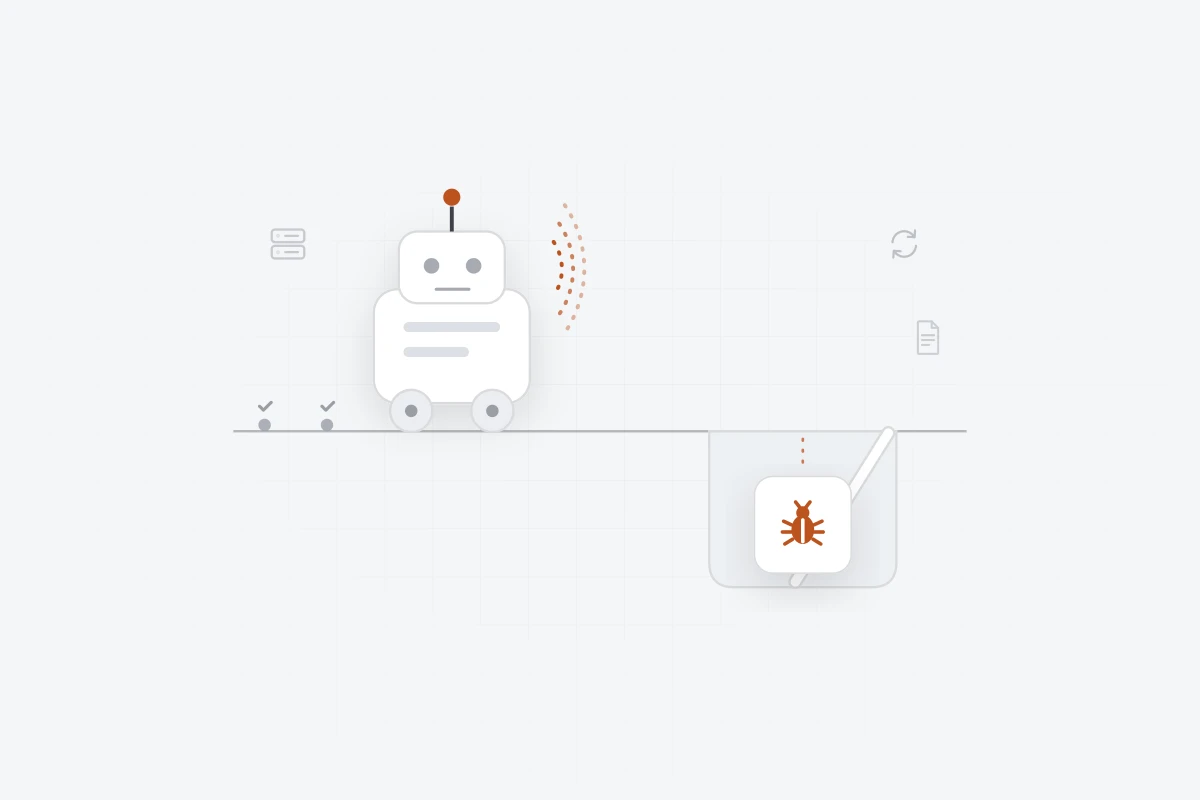
A purple team exercise puts attackers and defenders in the same room, on purpose. The red side executes a technique — a credential dump, a lateral movement step — and the blue side checks in real time whether anything fired: a log, an alert, a block. Then both sides fix the gap and run it again. No stealth, no gotcha report at the end; the product is detection coverage, improved live.
The name causes confusion because it sounds like a third team. It isn’t — it’s a working format, usually a series of structured sessions between an offensive operator (internal or hired) and the existing SOC or detection team.
How it differs from a pentest or red team
A penetration test measures vulnerabilities in a scope. A red team engagement measures whether an objective can be reached undetected. A purple team exercise measures and improves detection, one technique at a time — adversarial in content, collaborative in format.
The economics differ accordingly. A red team spends days evading; a purple team spends those same days generating telemetry on twenty techniques and tuning rules for the ones that passed silently. When the question is “do our detections work?”, purple teaming answers it per technique, at a fraction of the red team’s cost per data point.
How an exercise actually runs
Most exercises are organized around a framework, almost always MITRE ATT&CK. Planning picks the techniques that matter for the organization’s threat model — the ransomware playbook, the initial-access methods common in the sector. Each session then follows the same loop: the red side executes the technique, both sides check what the telemetry shows, the result is recorded (detected, logged-but-no-alert, invisible), and detection engineering closes the gap before the technique is re-run to confirm.
The honest finding in most first exercises is how much is logged and how little alerts. Data sitting in a SIEM that no rule ever reads is the most common gap, and it’s invisible until someone executes the technique and watches nothing happen.
What to track
The exercise is only as good as its records: which techniques were run, on which hosts, at what time, what was expected, what actually fired, and what changed in response. That log is also the evidence trail — the artifact that shows a security testing process to an auditor, and the baseline that makes the next exercise measurable against this one. Teams that track results per technique across quarters can show detection coverage improving the way engineering teams show test coverage improving.
When purple teaming makes sense
It presumes two things: a detection capability worth tuning (a SOC, an MDR contract, at least a SIEM someone watches) and fixed findings from regular pentesting, since there’s little point perfecting detection of lateral movement while the perimeter has known holes. For organizations past those gates, a quarterly cadence of focused sessions beats an annual big-bang exercise — techniques drift, and so do detections.
Tracking attack execution, results and retest evidence across sessions is the same record-keeping problem pentest engagements have. We’re happy to show how teams use PentestPad to keep that trail organized.
Want to save time on reporting?
Let PentestPad generate, track, and export your reports - automatically.